




A Complete Guide to Fastener Components for Engineers and Procurement Teams
Everything procurement teams and design engineers need to know before sourcing industrial fastening solutions.
Walk onto any factory floor. Look past the machines, the conveyors, the noise. Notice the small stuff instead. Bolts. Pins. Tiny bits of hardware nobody photographs for the brochure. Pull one out, though, and things fall apart fast. That's Fastening Components for you. Quiet. Unglamorous. And somehow holding everything else together.
Engineers know this. Procurement teams learn it the hard way, usually after a delay nobody planned for. Get the small parts right, and a project runs for decades without drama. Get them wrong, and you're firefighting.
This guide walks through what these components actually are, why they matter more than people assume, and where sourcing decisions tend to go sideways. No fluff. Just what you need before placing an order.
One more thing worth saying upfront - this isn't only an engineering problem. Procurement often carries the blame when a batch underperforms, even though the spec came from someone else.
What Are Fastener Components?
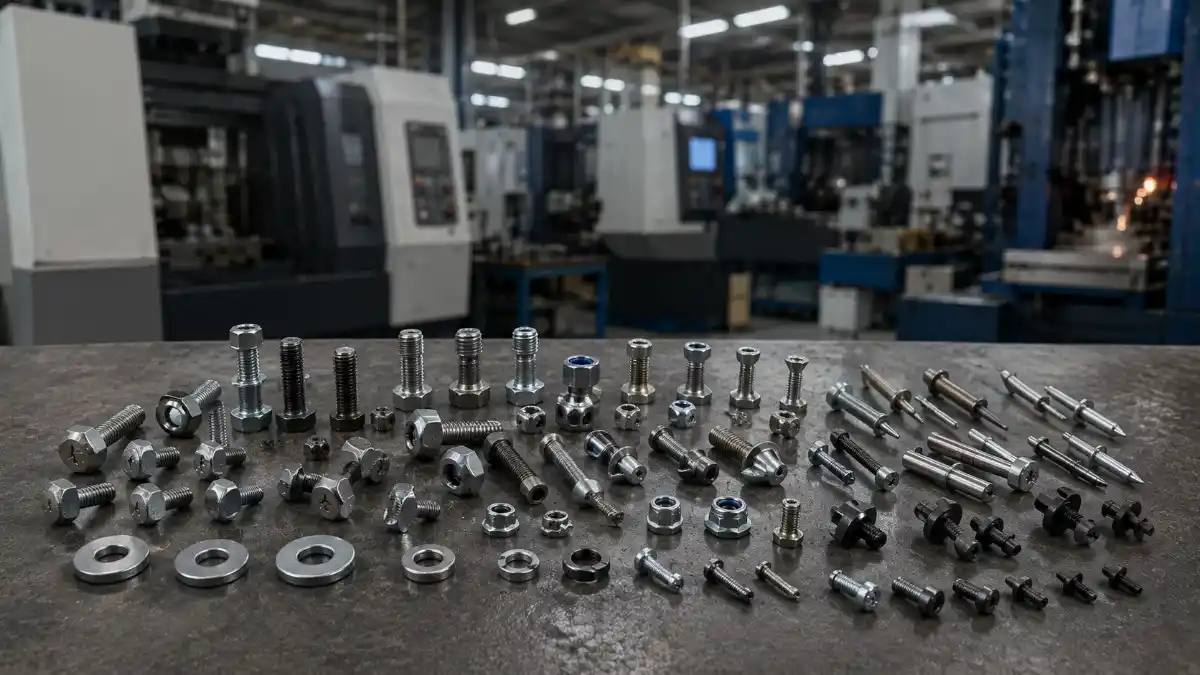
Fastener Components are the individual parts that join, secure, or hold mechanical and structural assemblies together. Not just the classic nut-and-bolt picture. This category spans Forged Bolts, connecting pins, load-bearing washers, threaded nuts - each one built for a different kind of stress.
Manufacturing runs on these parts. Automotive lines, heavy machinery, construction frames. Take away the fasteners and none of it stands up. Even a well-designed frame is only as strong as the smallest pin holding a joint together - which is a strange thing to sit with once you actually notice it.
Why Is It Important?
Nobody talks about fasteners until one fails. Pick the wrong grade, and you're not looking at a minor annoyance. You're looking at a breakdown.
- Torque, grade, material - get any one wrong and structural integrity suffers.
- Engines vibrate constantly. Components need real fatigue resistance, not a best guess.
- Automotive and industrial sectors expect certified, traceable parts. Regulators don't negotiate.
- One failed pin, one halted line. Downtime adds up fast.
So Industrial Fasteners aren't a line item you rush through. They're a risk decision, whether anyone frames it that way or not.
Here's the honest version: an engineer can design something perfect on paper. Then a low-grade nut ends up in a high-vibration engine bay, and none of that precision matters anymore. Good procurement teams know this. That's why they build relationships with suppliers instead of chasing the lowest quote every time.
Types of Fastener Components
Different jobs, different parts. Here's a rundown engineers actually work with day to day:
- Fastener Pins - handle alignment and load transfer in moving assemblies. Small, often ignored, expensive to source in a hurry.
- Fastener Nuts - threaded, paired with bolts, come in hex, lock, and flange styles depending on the joint.
- Fastener Washers - spread load, protect surfaces, cut down on loosening from vibration. Underrated, honestly.
- Forged Bolts - shaped through controlled deformation, giving them a tighter grain structure and real tensile strength.
- Rivets - permanent joins where welding isn't an option and vibration resistance actually matters.
- Automotive Fasteners - built specifically for engine bays, chassis frames, body panels. Heat and vibration tolerance, non-negotiable.
Features to Look For
Before placing any order, ask these questions first.
- Material grade - carbon steel, alloy steel, or stainless, based on load and corrosion exposure
- Surface finish - zinc plating, black oxide, galvanized coating, whatever suits the environment
- Dimensional accuracy - tolerances matter more in automated assembly than most people realize
- Load rating - tensile and shear strength that actually match the application, not just the datasheet
- Certification - IS and DIN standards, because traceability isn't optional on serious projects
TRIVIA: "Bolt" traces back to an Old English word for arrow - a nod to how early fasteners were driven straight through material.
Product Overview
If you're trying to consolidate sourcing, AFT's Fastener Components lineup covers forging components, custom forged fasteners, industrial forgings, and Forged Bolts built for genuinely demanding structural work. It stretches into Automotive Fasteners too - high-strength automotive bolts, Engine Fasteners, Chassis Fasteners - all manufactured under IS and DIN standards. One vendor, strength-tested parts, less back and forth.
Benefits
Why bother sourcing carefully instead of grabbing whatever's cheapest?
- Machinery and structures simply last longer.
- Fewer maintenance cycles, fewer replacements down the line.
- Safety compliance gets easier, not harder.
- Performance stays steady even under thermal and mechanical stress.
- Total cost of ownership drops, even when the unit price looks higher upfront.
Applications
- Automotive manufacturing - engine assembly, chassis construction, body panel joining
- Heavy machinery - load-bearing joints under constant vibration
- Construction and infrastructure - structural framing, equipment mounting
- Industrial plants - conveyors, pumps, rotating machinery
- Renewable energy - turbine assemblies, solar mounting structures
- Railways and metro projects - precision fastening where safety can't slip
Every environment stresses the part differently. Heat here, corrosion there, constant motion somewhere else. A one-size-fits-all part rarely survives all of that, no matter how good the price looked on the quotation.
FACT: Forged fasteners generally beat machined ones on tensile strength, because forging aligns the metal's grain instead of cutting through it.
Comparison of Common Fastener Component Types
| Component Type | Primary Function | Typical Environment |
|---|---|---|
| Pins | Alignment and load transfer | Moving assemblies, hinges |
| Nuts | Secure removable joints with bolts | General structural use |
| Washers | Load distribution, vibration control | High-vibration equipment |
| Forged Bolts | High tensile strength connections | Heavy structural loads |
| Rivets | Permanent joining without welding | Panels, sheet assemblies |
Expert Tips / Buying Guide
- Skip the price-only comparison. A bolt that fails costs way more than the few rupees saved.
- Match coatings to the environment. Outdoor, corrosive, high-heat - each needs something different.
- Ask for material test certificates on anything structural. Always.
- Look for Fastener Component Manufacturers in India who genuinely understand IS and DIN, not vendors reciting generic specs.
- Running a bulk project? Reliable Fastener Components Wholesalers in India can save you real headaches on logistics and consistency.
- Keep extra pins and washers on hand wherever vibration is constant. They fail first.
- Standardize where you can. Fewer variants means fewer things to double-check on every restock.
- Check documentation on every batch, not just the first one. Specs quietly shift more often than people admit.
AFT
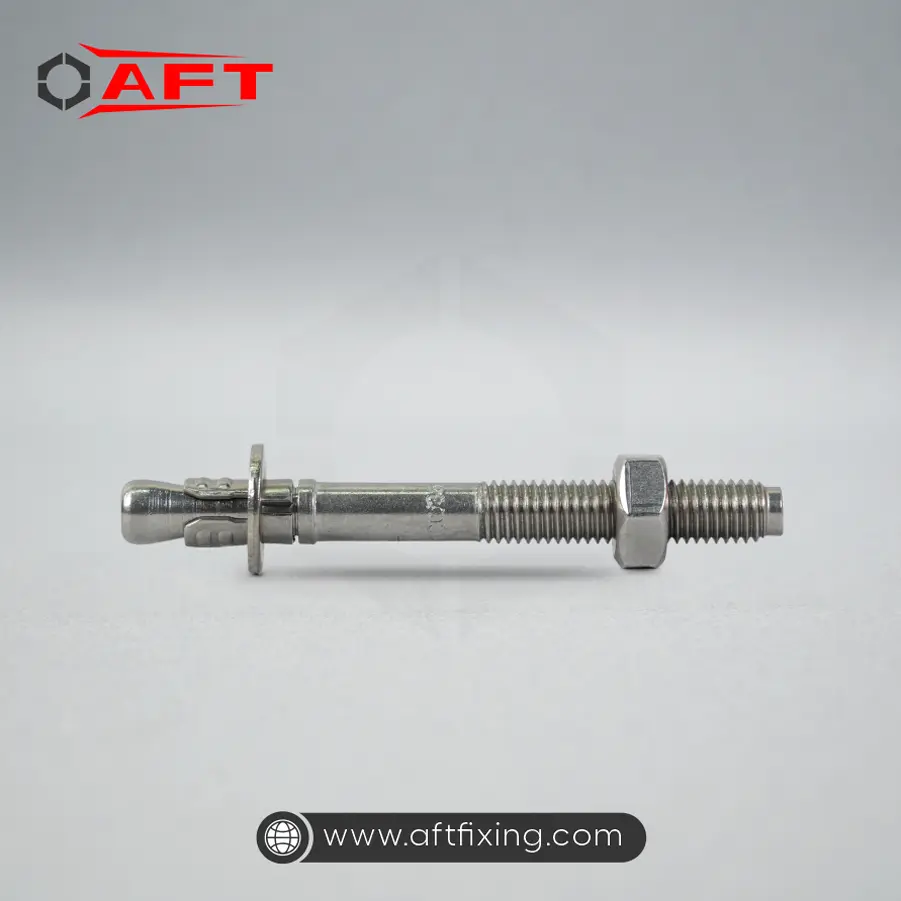
AFT (Anchorite Fixing Technology) is the best industrial fastening solution. We are the most trusted and reliable partner for many businesses. Since 2017 we have been providing solutions to various sectors. Our expertise is in providing the companies with high-performance and customized construction fastening solutions. We offer anchor fasteners and anchor products that are used in modern industries. AFT focuses on delivering reliable and durable fastening systems that ensure safety and performance. We provide sustainable solutions that meet the modern industrial demands. AFT combines advanced technology with industry expertise to provide efficient solutions. If you are ready to source high-quality fastening solutions, then you are at the right place. We also serve nuts and bolts, anchor-type products, and rods that will meet your needs perfectly.
FAQs
1. What are fastener components used for?
Ans: Fastener components join, secure, or hold structural parts together — simple as that. You've got bolts, pins, nuts, washers, rivets, and each one is quietly doing its own job under stress. Skimp on fastening and a well-built structure won't last. Automotive lines, heavy machinery, construction frames — none of it stays standing without them.
2. How do I choose the right fastener component for my project?
Ans: Start with the environment, honestly. Outdoor, corrosive, high-vibration — each demands a different material grade and coating. Then check load rating against the actual application, not just the datasheet. Certification matters too. IS and DIN standards aren't paperwork for the sake of it; they're proof the part will actually perform under pressure.
3. Forged bolts vs. regular machined bolts — what's the real difference?
Ans: It comes down to how the metal's worked. Forging pushes the grain into shape rather than slicing through it, and that's basically why forged bolts hold up better under tension and repeated stress. Machined bolts still do fine for lighter jobs. But once heavy structural load enters the picture, forged tends to win out.
4. Why do vibration-heavy environments need special fastener washers?
Ans: Vibration loosens things over time, no way around it. Washers distribute load evenly and stop bolts from working themselves loose under constant movement. Skip them or use the wrong type, and you're looking at premature wear, rattling joints, even failure down the line. Small part, honestly, but it does a lot of quiet work.
5. Are fastener components used in the automotive industry different from standard ones?
Ans: Yes, quite different actually. Automotive fasteners handle constant heat and vibration that standard hardware can't take. Engine bays, chassis frames, body panels — each needs parts engineered for those exact conditions. Somewhere in the average car, over 3,000 of these components are sitting there, mostly unnoticed, doing their job.
6. Sourcing fastener components in India — what should I actually check?
Ans: Look past the price sheet first. A solid manufacturer follows IS and DIN standards, hands over material test certificates, and actually understands your application — not just your order size. Ask about traceability too. Working with reliable fastener components wholesalers in India can also ease bulk logistics, one vendor instead of five.
Conclusion
Fastener Components don't get much attention, and honestly, that's fine - until they fail. Get this category wrong, and everything built on top of it becomes shaky. Fastener Pins, Forged Bolts, Rivets, Automotive Fasteners - each does a specific job, and none of them are optional. The material, the standard, the supplier you pick. None of it is a small decision, even when it feels like one at the time of ordering.
| Need reliable Fastener Components for your next project? Talk to AFT for precision-engineered, standards-compliant fastening solutions that actually hold up. |