




How to Avoid Common Errors in Stone Cladding?
Architectural Design has always had a strong preference for the utilization of natural stone materials, providing a sense of timelessness and beauty in its creations. Commercial buildings and upscale residential projects would appear as a permanent fixture to any building as a result of the application of stone cladding, providing a grand, substantial, and prestigious finish. However, the durability of these buildings over time will depend upon the ability of their associated mechanical systems to provide a sound basis for attaching and retaining them to the structure.
In AFT's experience, both designing and designing without an awareness of the load-bearing capacity and thermal expansion of the stone being utilized will lead to potential large-scale structural failures. Contractors need to have the necessary knowledge about the stone materials they are working with to properly install the necessary elements for securing that stone in accordance with the manufacturer's specifications for many years.
5 Factors To Avoid Usual Errors in Stone Cladding
Here are the five steps that help you to avoid errors.
1: Planning and Surface Preparation
Inspect the surface substrate before beginning stone installation. Verify that the wall is solid and clean of dust. One of the biggest mistakes made by installers is not considering the total weight of the planned stone slabs. Depending on the specific nature of heavy-duty vertical installations, the most common preferred method by installers to attach Stone Fixing Anchor Wall Clamps is to use a mechanical connection system that provides a direct connection between the structural backing and each stone slab.
The installer's level of precision begins with marking and mapping. Using a laser, the installer will visually lay out a grid that will identify the location for each installed bracket. The initial bracket locations can create an extreme misalignment by the time you reach the third or fourth floor of a building. Before installing the stone, you must be sure that the wall is plumb and level to achieve a perfect finished product.
2: Selecting the Right Hardware
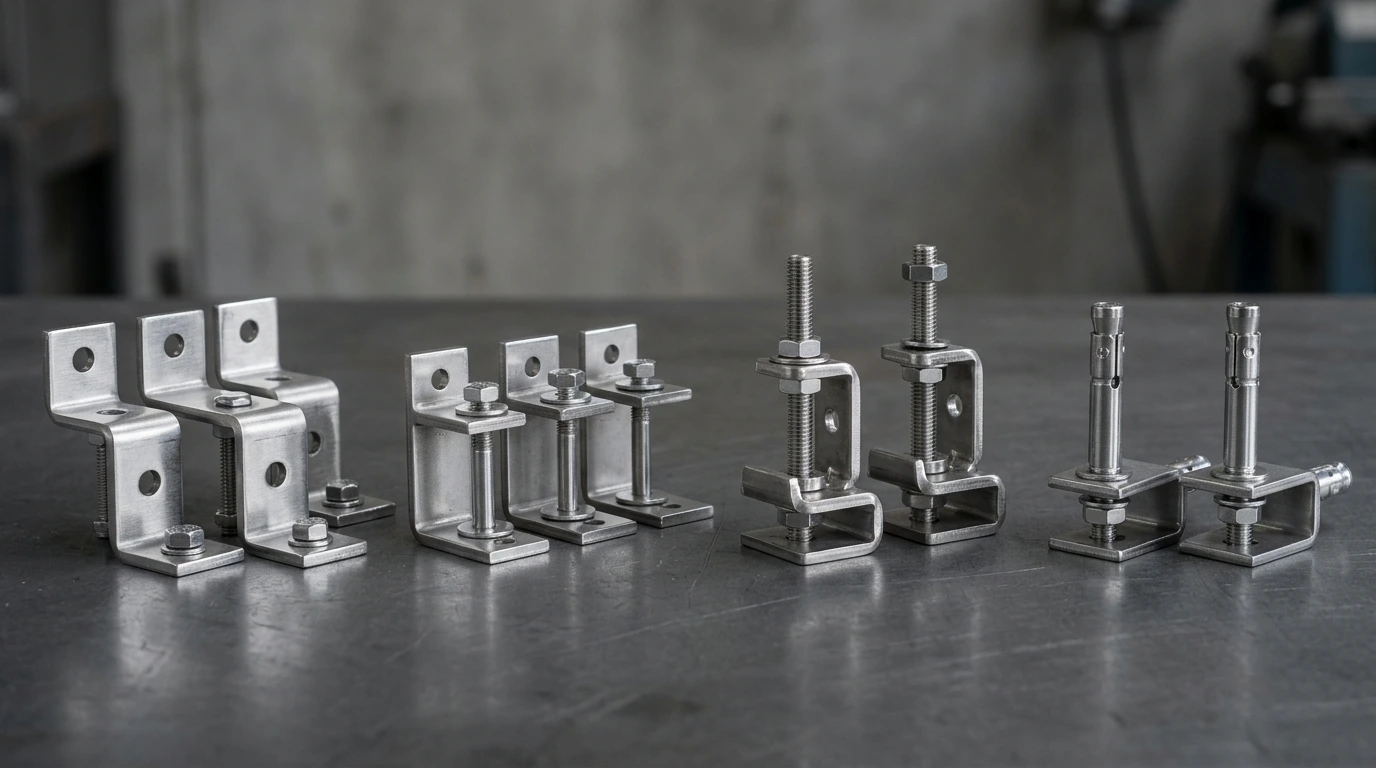
An installer's choice of hardware is based on the stone that is being used, its type and also thickness as well as external environmental issues, such as wind load. When a project requires a certain flexibility to accommodate minor irregularities in walls, Adjustable Clamps are used. The clamps provide the ability to allow three-dimensional movement during the installation phase as well as the capability of achieving flat surfaces even if the concrete substrate is uneven.
Brackets are not only adjustable, but their physical shapes also come into play when selecting a type of hardware. For example, many types of modern facades utilize Z clamps due to their strength and simplicity. A Z clamp is an excellent choice for most standard vertical panel installations, particularly where a clean, interlocking connection is necessary. If the hardware is chosen incorrectly, "lip-page" may occur; the ends of the stones will not connect flush with one another.
3: The Installation Phase
It is time to begin drilling after the layout has been confirmed. Holes will be drilled to the specific depths necessary to allow the anchor to expand properly into the substrate. When heavy granite or marble is used, Undercut Anchor Clamp technology is generally accepted as the best solution. This means that the anchor can lock into the stone itself, without creating any internal stresses, by first drilling a broader bottom hole for the anchor.
The secondary support system is then installed on the anchors. The building's skeleton and the stone skin are generally connected at the Facade Clamps during the installation phase, so it is important that the stainless steel is of sufficient quality to avoid galvanic corrosion that may weaken the system over time.
Essential Hardware for Stone Cladding
To help you distinguish between the various components available, the following table summarizes the primary uses of common cladding hardware.
| Clamp Type | Primary Application | Best For |
|---|---|---|
| Chair clamps | Bottom-most stone row support | High load-bearing capacity |
| Z clamps | Intermediate stone support | Speed and efficiency |
| Adjustable clamps | Uneven substrates | Precision alignment |
| Undercut anchors | Rear-side mechanical fixing | Thin or fragile stone panels |
| Stone fixing anchor wall clamp | Direct wall-to-stone connection | Heavy slabs |
4: Managing Expansion and Joints
One of the most common errors made in the installation of stone cladding is "tight-jointing"; this is when stone slabs are directly touching each other without any separation. Both stone materials expand and contract due to temperature changes. Without appropriate gaps or joints to permit movement, stones will crack and pop off the wall under pressure.
Professionals in the stone cladding industry utilize a Chair Clamp. The clamps are placed at the base of the installation, which provides a strong starting point for properly holding the stone at the required distance from the backup wall during installation and allowing for adequate space for stone movement during expansion/contraction.
The use of quality Natural Stone Cladding Clamps enables stone to be spaced uniformly from the backup wall which provides a "cavity" for ventilation and moisture control. Water trapped behind the stone will promote efflorescence or result in freeze-thaw damage in cold climates, which will eventually cause significant internal cracking within the stone material.
5: Quality Control and Sourcing
The longevity of a stone wall system is directly related to the quality of all components used to construct the system. While contractors will frequently attempt to find the lowest price on any one item, like Stone Cladding clamps, in order to keep the project within budget constraints, there should never be any compromises in terms of quality vs cost. Using subpar alloys can cause streaking of rust on the face of each stone; once these stains occur, it can be almost impossible to get rid of them without replacing an entire slab of stone.
Sourcing proper materials from the proper manufacturers within the Indian marketplace are vital for success in your project. Consequently, while seeking out vendors for Stone Cladding Clamps in India, you must ensure that you are only dealing with companies who provide material test certificates for their products. Reliable Stone Cladding Clamp Suppliers in India will be able to provide documentation proving that all of their hardware conforms to international norms concerning both shear and tension strength.
Here is another blog you might be interested in:
Technical Red Flags: A Contractor’s Final Checklist
When determining whether your next building construction will succeed:
Keep these important points in mind:
- Wind Loads: The majority of high-rise buildings develop updrafts that create significant suction force; therefore, the number of Facade Clamps required per square meter must be calculated.
- Using Incorrect Drill Bits: Using a worn-out bit will produce oversized holes that may cause failure of anchors.
- Mixing Materials: The combination of a carbon steel bolt with a stainless steel clamp will cause rapid corrosion.
- Shimming: Not using plastic shims to level out "metal-to-stone" contact points can cause cracks.
- Sourcing: When purchasing from an unverified Stone Cladding Clamp Wholesalers in India, they may provide varying quality per batch.
Maintenance & Final Inspection
A full walkthrough must take place upon completion of the installation process. You should look for stray panel gaps as well as any signs of compromising the integrity of the install due to incorrectly torqued bolts on panels, regardless of how many good clamps were used to hold it in place. The proper process will be held in place through: Regularly checking your apartment's sealing of its expansion joints is key to providing a longer life to the wall's finish.
When considering large-scale infrastructure projects, reliable suppliers are vital for sourcing Stone Cladding Clamp in India is particularly important, as you want to partner with a manufacturer that understands how to work with local climates and what kinds of architectural styles they can expect to modify. From using an Undercut Anchor Clamp system to provide a contemporary appearance to using more traditional methods, flawless hardware is essential.
About Us (Anchorite Fixing Technology)
AFT Anchorite Fixing Technology is the best industrial fastening solution. We are the most trusted and reliable partner for many businesses. Since 2017 we have been providing solutions to various sectors. Our expertise is in providing the companies with high-performance and customized construction fastening solutions. We offer anchor fasteners and anchor products that are used in modern industries. AFT focuses on delivering reliable and durable fastening systems that ensure safety and performance. We provide sustainable solutions that meet the modern industrial demands. AFT combines advanced technology with industry expertise to provide efficient solutions. If you are ready to source high-quality fastening solutions, then you are at the right place. We also serve nuts and bolts, anchor-type products, and rods that will meet your needs perfectly.
Frequently Asked Questions
1. What are the primary benefits of using a mechanical stone cladding system?
Mechanical systems using a Stone Fixing Anchor Wall Clamp offer superior safety and durability compared to traditional wet-fix methods. These systems allow for a ventilated cavity behind the stone, preventing moisture buildup and efflorescence. Furthermore, mechanical fixings like Z clamps or Adjustable Clamps accommodate structural movements and thermal expansion, ensuring the stone panels remain securely attached for the long term.
2. How do I choose between different types of facade clamps for my project?
Selecting the right hardware depends on the stone's weight, thickness, and the building's height. For instance, Chair Clamps are typically used to support the weight of the bottom-most stones, while Undercut Anchor Clamp systems provide a discreet, high-strength connection for thinner panels. Consulting with Stone Cladding Clamp Suppliers in India can help you determine the specific load-bearing requirements for your facade.
3. Why is it important to source from verified stone cladding clamp wholesalers in India?
Sourcing from reputable Stone Cladding Clamp Wholesalers in India ensures that the materials used in your project meet international safety and quality standards. Low-quality hardware can lead to oxidation, causing unsightly rust stains or, in extreme cases, structural failure. AFT (Anchorite Fixing Technology) provides certified Natural Stone Cladding Clamps that are tested for tension, shear strength, and long-term corrosion resistance.
4. What is the role of adjustable clamps in achieving a perfect finish?
Precision is difficult when dealing with uneven concrete walls. Using Adjustable Clamps allows installers to fine-tune the position of each stone slab in three dimensions. This flexibility is essential for correcting "lip-page" and ensuring that the entire facade presents a perfectly flat, uniform surface. Without this adjustability, the aesthetic value of high-quality Natural Stone Cladding Clamps would be completely lost.
5. Are there specific price considerations when buying stone cladding clamps in India?
While seeking a competitive Stone Cladding Clamps Price is important for project budgeting, it should never compromise the grade of stainless steel. Investing in high-quality Facade Clamps from AFT (Anchorite Fixing Technology) reduces long-term maintenance costs and prevents the need for expensive structural repairs. In the Indian market, prices vary based on the complexity of the design, such as undercut anchor clamp configurations.
6. How do undercut anchor clamp systems enhance the safety of modern building facades?
Using an Undercut Anchor Clamp provides a mechanical lock within the stone itself, creating a stress-free attachment point that is much stronger than traditional adhesive methods. This is critical for high-rise buildings where wind suction can be intense. By distributing the load internally, these anchors prevent the stone from cracking or falling, ensuring a high-end, durable, and safe architectural finish.
Conclusion
Installing stone cladding with precision is a combination of engineering and art. By selecting the appropriate Adjustable Clamps and adhering to an exact installation process, you will protect both the visual appearance of the structure and also ensure the safety of the people in and around the building. A master contractor performs the task of avoiding errors which are very common, such as poor anchoring, incorrect joint management, etc.
If you require any assistance with fastening products for construction solutions, Stone Cladding Clamps, nuts and bolts, anchors, rods, or any related items, Contact us now.