




Anchor Fasteners vs Traditional Fastening Methods: Which Is Better?
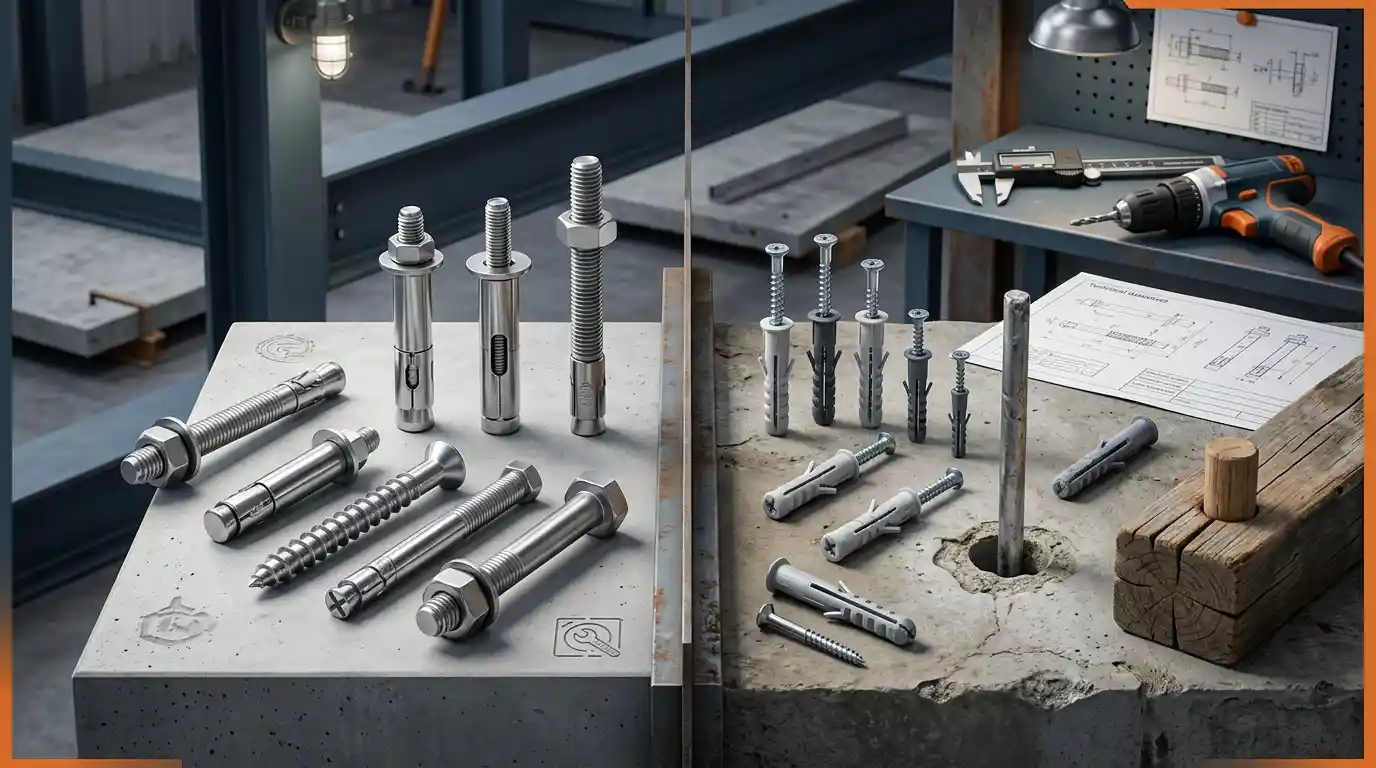
A ground-level look at modern anchoring versus old-school fixing — and why the gap between the two is bigger than most people realise.
Nobody talks about fasteners until something falls. That's the honest truth. On most sites, fixings get picked almost on autopilot — whatever's been used before, whatever's in stock, whatever gets the job done fastest. And a lot of the time it works fine. Until it doesn't.
This piece is for anyone who's ever had a bolt pull out of a concrete wall and wondered why, or stood in front of a supplier's catalogue trying to choose between Anchor fasteners and the grouted rod method their team has always used. We'll break it down plainly — no fluff.
What's the Actual Difference?
At the basic level, both approaches do the same thing: they attach one thing to another. But how they do it — and how reliably — that's where things diverge.
Traditional fastening covers a broad category. Raw plugs, wooden dowels, grouted-in rods, toggle bolts — methods that have been around long enough to feel safe just by association. Some of them are perfectly adequate for the right job. A raw plug with a wood screw to hang a shelf? Fine. That same approach on an industrial pipe bracket carrying live load? Not fine.
Anchor fasteners — wedge anchors, sleeve anchors, drop-in anchors, Nylon Frame Fixing Anchors, bullet fasteners, concrete screws — are engineered to transfer load deep into the substrate. Not surface grip. Internal resistance. That changes how the fixing behaves under load, under vibration, and over time.
Understanding the Types
Getting familiar with anchor fastener types makes specifying and buying a lot simpler. Here's what you'll most commonly encounter on Indian sites:
- Anchor fastener bolts (wedge anchors) — the heavy-duty option. The sleeve expands inside the drilled hole, locking in place. Right call for structural steel connections and machinery bases.
- Sleeve anchors — better for hollow or lighter masonry. The outer sleeve flares as you tighten, and they're easier to install in mixed substrates.
- Drop-in anchors — internally threaded, sit flush into concrete. Especially useful for overhead work where a protruding bolt creates problems.
- Concrete screws — thread directly into a drilled hole, no separate anchor body needed. Fast, removable, reliable for medium loads.
- Nylon frame fixing anchors — the standard for door and window frames in masonry. The plastic body absorbs torque without cracking the surrounding material.
- Bullet fasteners — compact, flush-finish fixing in concrete. Common in interior fit-out where appearance matters.
AFT (Anchorite Fixing Technology), based in Sonipat, Haryana, produces this full range built for Indian conditions — coastal humidity, seismic zones, the extreme thermal stress of northern plains summers. A product spec tested in Germany doesn't automatically translate to a site in Vizag.
Where Traditional Methods Fall Short
Grouting is slow. Curing takes hours, and the final strength depends almost entirely on how carefully the grout was mixed and allowed to set. On a busy site with deadline pressure, 'careful' is the first thing that gets compromised. The rating you get in the lab rarely matches what you get in the field.
Raw plugs with screws aren't designed for load-bearing work. They're for lightweight fixings — cable clips, small brackets, picture frames. Using them for anything heavier is a site-level gamble that sometimes pays off and sometimes doesn't. There's no way to know which until something moves.
Cast-in channels need to be planned at the design stage. For renovation, retrofit, and infrastructure upgrades — which is most of the work that actually happens — they're not available. And toggle bolts in hollow walls carry load ratings that are hard to verify and easy to exceed.
A Direct Comparison
Here is the comparison table.
| Parameter | Anchor Fasteners | Traditional Fixings | Verdict |
|---|---|---|---|
| Load Capacity | High — tested for structural loads | Low to moderate | Anchor wins |
| Installation Speed | Fast — drill, insert, torque | Slower — mixing, curing, preparation | Anchor wins |
| Reversibility | Most types removable | Grouted fixings are permanent | Anchor wins |
| Consistency | Factory-tested tolerances | Workmanship-dependent | Anchor wins |
| Best Use Case | Industrial, structural, infrastructure | Light residential, non-load-bearing | Context-dependent |
The Practical Case for Making the Switch
Speed is part of it. Most mechanical anchor fastener products are ready to load within minutes — drill the hole, clean it, insert, torque to spec. On a project with 400 fixing points, the difference over grouting adds up to days, not hours.
Corrosion resistance matters too. Quality products come zinc-plated, hot-dip galvanised, or full stainless depending on the environment. A plain mild steel grouted rod in a coastal building has a limited service life before corrosion compromises the load path. That's a documented failure mode, not a theoretical one.
Then there's the compliance side — which carries more weight now than it did a decade ago. Anchor fastener manufacturers in India like AFT supply datasheets, load ratings, and installation specs. That paperwork is what engineers need to sign off on structural connections, what contractors need for quality records, and what facility managers need for long-term asset tracking. Traditional methods often have none of it.
Anchor fastener dealers in India — in metros and increasingly in tier-2 cities — carry the full range. For project procurement, working with anchor fastener wholesalers in India keeps anchor fastener prices competitive and ensures batch consistency across large orders.
What to Check Before You Buy
Not all anchor fastener suppliers in India offer the same quality. A few things worth verifying before committing:
- Material grade — for outdoor, coastal, or chemically aggressive environments, ask specifically for hot-dip galvanised or stainless. Don't assume zinc plating is enough.
- Pull the technical datasheet and check published load ratings against your actual site requirement. Don't estimate.
- Check for MSME or ISO certification — it's a basic indicator that manufacturing processes are documented.
- Compare anchor fastener price against the performance spec, not just the per-unit cost. A cheaper anchor that fails costs more than an expensive one that holds.
- Ask for samples before placing a bulk order. Any serious supplier will accommodate that.
About Us (Anchorite Fixing Technology)
AFT (Anchorite Fixing Technology) is the best industrial fastening solution. We are the most trusted and reliable partner for many businesses. Since 2017 we have been providing solutions to various sectors. Our expertise is in providing the companies with high-performance and customized construction fastening solutions. We offer anchor fasteners and anchor products that are used in modern industries. AFT focuses on delivering reliable and durable fastening systems that ensure safety and performance. We provide sustainable solutions that meet the modern industrial demands. AFT combines advanced technology with industry expertise to provide efficient solutions. If you are ready to source high-quality fastening solutions, then you are at the right place. We also serve nuts and bolts, anchor-type products, and rods that will meet your needs perfectly.
FAQs
Q1. What's the difference between anchor fasteners and traditional fastening methods?
Ans: Simple — anchor fasteners bite deep into the substrate. Raw plugs and grouted rods sit near the surface, and their holding strength depends almost entirely on whoever installed them that day.
Q2. Which anchor fastener type works best for heavy structural jobs?
Ans: Wedge anchors, no question. They expand inside the hole and stay locked. For machinery bases, structural steel, high-vibration environments — that's what you want. Nothing else comes close.
Q3. Do anchor fasteners actually work well in Indian site conditions?
Ans: AFT designs their range specifically for India — coastal humidity, seismic zones, brutal summer heat cycles. A product spec tested in Europe doesn't always survive a site in Vizag or Jammu.
Q4. How fast can you install an anchor fastener on site?
Ans: They can be installed very fast. Drill, clean the hole, insert, torque — done in minutes. Grouting needs mixing, pouring, then curing time before the fixing is usable. On big sites, that difference costs real money.
Q5. Can you remove anchor fasteners once they're installed?
Ans: Some yes, some no. Concrete screws and sleeve anchors come out cleanly. Wedge anchors are essentially permanent. Check the datasheet before specifying — reversibility matters more than people realise mid-project.
Q6. How do I order anchor fasteners in bulk for a large project?
Ans: AFT supplies dealers and wholesalers across metros and tier-2 cities. For bulk orders, reach out directly at aftfixing.com .
Conclusion
The choice between anchor fasteners vs traditional fastening methods comes down to what you're willing to stake on workmanship. Traditional methods can work — in the right conditions, with careful people, for the right loads. But modern anchor systems take that variable out of the equation. The performance is in the product, not the person installing it.
For anything structural, industrial, or infrastructure-related, the case is clear. Modern anchor fastener products deliver speed, documentation, and tested reliability that older methods can't match. That's why anchor fastener dealers in India are seeing demand move in one direction — and it's not backwards.
| Ready to Upgrade Your Fixing System? Speak to AFT (Anchorite Fixing Technology) for bulk enquiries, product samples, and technical support. |