




Common Fastener Installation Mistakes That Impact Site Safety
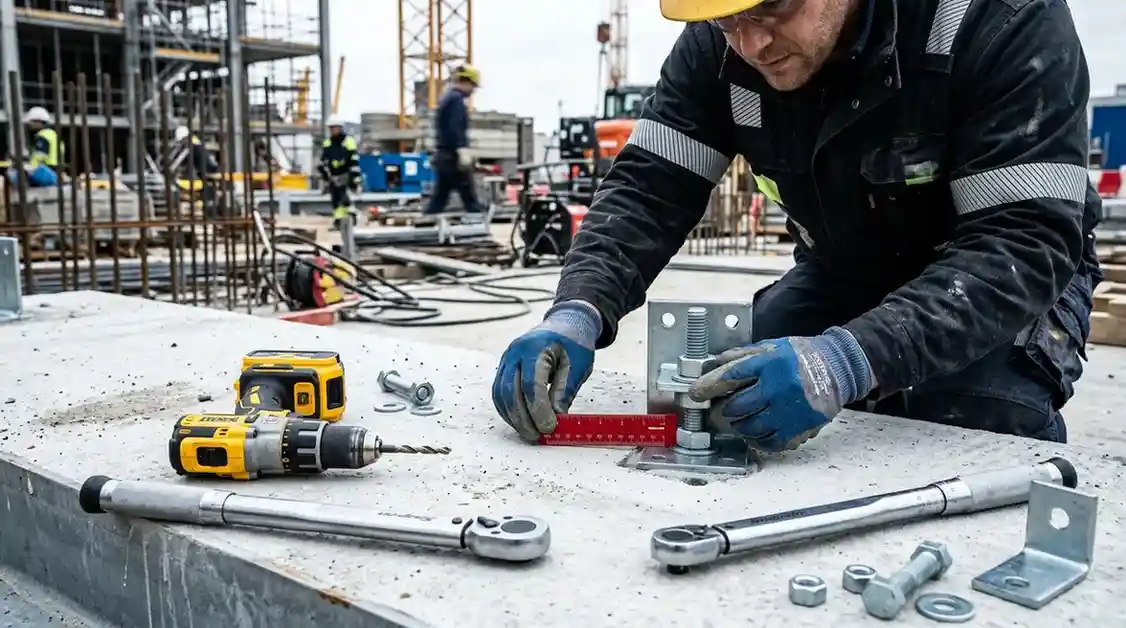
Nobody checks the Bolts until something shifts. Thats the real problem on most sites — not the product, not the design. The installation.
Site teams move fast. Holes get drilled by feel. Nuts and bolts get tightened until they stop turning. Instructions sit in the packaging. And for months — sometimes years — nothing seems wrong.
Then a load increases. A cycle repeats. A vibration builds. And something that was never properly fixed finally gives. That's when the paperwork starts — and the real cost shows up.
What Makes Anchor Fasteners Different From Standard Fixings
A standard fixing sits on the surface. An Anchor Fastener works inside the base material — concrete, masonry, or stone — transferring load through expansion, friction, or chemical bond.
Types you'll encounter on most sites: wedge anchors, sleeve anchors, drop-in anchors, Anchor and Bolt combinations, and threaded rods. Each one has a specific installation sequence. Miss a step and the rated load values mean nothing.
That's why working with a reliable Anchor Fastener Manufacturer in India matters — but it's not the whole answer. Good product installed wrong still fails.
|
TRIVIA: The term 'anchor' in mechanical fixing comes from the Latin ancora — to hold firmly against opposing force. Same idea as a ship's anchor holding against current. |
Old-School Site Practice vs. What the Standards Actually Require
Most sites still run on instinct over instruction. Here's where the gap shows up:
- Old way: drill until it looks deep enough, skip hole cleaning, tighten until it won't move.
- Correct way: drill to the specified diameter and embedment depth — exactly. Clean the bore. Torque to the number.
- Old way: use the same anchor type regardless of base material.
- Correct way: select the anchor for the substrate — cracked concrete, hollow block, and solid masonry each need a different product.
- Old way: installation guide is optional.
- Correct way: the installation guide is part of the technical approval. Deviate from it and the certified load values no longer apply.
Installation Errors That Kill Structural Safety
Error 1: Wrong Hole Diameter or Depth
This is the most common Anchor Fastener Installation Mistake — and the hardest to spot once the bolt is in. Drill too wide and the anchor can't grip the bore wall. Drill too shallow and a wedge anchor won't expand fully.
Every Fasteners product comes with a specified hole diameter and minimum embedment depth. Those numbers set the rated tensile load. Ignore them and you're guessing at what the connection can actually carry.
Error 2: Skipping Hole Cleaning
Drilling into concrete leaves fine dust and debris inside the bore. If you drop Anchors and Fasteners straight in without clearing it — that debris sits between the anchor and the concrete. It kills friction grip. In chemical anchor systems, it prevents resin from bonding properly.
The fix is simple: blow out the hole, brush it, blow again. It takes 30 seconds. Skipping it can cut holding strength by 40% or more.
Error 3: Over-Tightening the Bolt
More torque doesn't mean a stronger fix. With a Bolt Fastener assembly, going past the specified torque value causes concrete micro-cracking at the bore wall. It can strip threads on the anchor fastener bolt or trigger premature expansion — both prevent the anchor from setting correctly.
Use a torque wrench. Set it to the number in the spec sheet. That's it.
Error 4: Wrong Anchor for the Base Material
A wedge-style Anchor and Bolt that performs brilliantly in solid concrete will fail in hollow block or cracked substrate. Expansion anchors need solid material to push against. Put one in the wrong base and it won't hold under any meaningful load.
Check the substrate first. Match the Anchor Fastener to what it's going into — not just to the load requirement.
|
DID YOU KNOW: Load values in anchor datasheets are only valid when installed exactly as specified — correct hole size, depth, clean bore, and right torque. Any deviation and those numbers no longer apply. |
Site Error vs. Structural Risk — Quick Reference
Know everything about site errors and what they actually meant:
| Site Error | What Actually Happens | Risk Level | Right Approach |
|---|---|---|---|
| Wrong hole diameter | Anchor sits loose, can't grip | High | Match drill bit to anchor spec |
| Hole too shallow | Anchor won't expand fully | High | Drill to min. embedment depth |
| Unclean bore | Dust breaks grip — anchor slips | Medium-High | Blow, brush, blow again |
| Over-torqued bolt | Thread strips or concrete cracks | High | Use torque wrench to spec |
| Wrong anchor for base | Expansion fails in hollow substrate | Critical | Match anchor to base material |
| Skipped instructions | Wrong sequence, missing parts | Variable | Follow printed guide fully |
Why Correct Installation Protects Everyone on the Project
Getting the Anchors and Fasteners installation right isn't just technical compliance. It has direct consequences for everyone involved:
- Structural safety — load paths hold. No unexpected failure under operational or seismic stress.
- Compliance — correctly installed anchors keep their technical approval. Audits and inspections go through clean.
- Cost — rework on a failed structural connection costs far more than a 10-minute installation check.
- Site safety — an improperly fixed overhead element, cladding panel, or equipment bracket is a hazard to personnel.
Where Installation Accuracy Is Non-Negotiable
Concrete Anchor Fasteners show up across every high-stakes environment:
- Civil infrastructure — bridges, metro rail, flyovers. Dynamic and seismic loads. Zero margin for error.
- Industrial plants — base plate anchoring, pipe supports, cable tray systems.
- Commercial construction — curtain wall systems, overhead signage, structural steel connections.
- Renewable energy — solar mounting frames, wind turbine bases. Continuous cyclic loading.
- Railways and airports — mandatory safety certification at every fixing point.
|
FACT: Most post-incident structural fastening investigations trace failure back to installation error — not product defect. Supervision and training at the installation stage cut site risk significantly. |
About AFT Fixing
AFT — Anchorite Fixing Technology — is an established anchor fastener manufacturer in India with 10+ years building mechanical fixing solutions for infrastructure, industrial, and commercial construction.
AFT (Anchorite Fixing Technology) is the best industrial fastening solution. We are the most trusted and reliable partner for many businesses. Since 2017 we have been providing solutions to various sectors. Our expertise is in providing the companies with high-performance and customized construction fastening solutions. We offer anchor fasteners and anchor products that are used in modern industries. AFT focuses on delivering reliable and durable fastening systems that ensure safety and performance. We provide sustainable solutions that meet the modern industrial demands. AFT combines advanced technology with industry expertise to provide efficient solutions. If you are ready to source high-quality fastening solutions, then you are at the right place. We also serve screw fasteners, nuts and bolts, anchor-type products, and rods that will meet your needs perfectly.
For fastener suppliers in India, fastener dealers in India, and anchor fastener wholesalers in India — AFT delivers products built to perform at site level, not just pass a catalogue spec.
FAQs
Q1. What is the most common anchor fastener installation mistake on construction sites?
Ans: Drilling the wrong hole diameter is the most frequent error. It stops the anchor gripping the bore wall properly, reducing load capacity and compromising the entire structural connection below spec.
Q2. Why does hole cleaning matter before inserting concrete anchor fasteners?
Ans: Dust inside the bore sits between anchor and concrete, breaking friction grip. In chemical anchor systems, it stops resin bonding fully — cutting overall holding strength by up to 40%.
Q3. Can over-tightening bolts and nuts damage the structural connection?
Ans: Yes. Exceeding the torque spec causes concrete cracking or strips threads on the bolt fastener. Either outcome prevents the anchor from setting correctly and directly compromises its structural load-bearing capacity.
Q4. How do I select the right anchor fastener for different base materials?
Ans: Solid concrete, hollow block, and cracked masonry each need a different anchor type. Match the anchors and fasteners to the substrate first — wrong anchor choice causes immediate load failure.
Q5. Do AFT anchor fasteners come with technical installation documentation?
Ans: Yes. Every AFT product ships with full specifications — correct hole size, embedment depth, torque value, and substrate compatibility — keeping site teams accurate and maintaining certified structural load performance.
Q6. Where can contractors source anchor fasteners and screw fasteners in bulk across India?
Ans: AFT — Anchorite Fixing Technology — supplies anchor fasteners, screw fasteners, and bolt fastener products across India. Visit aftfixing.com to request bulk quotes, download technical catalogues, and get installation support.
Conclusion
Most structural fastening failures aren't a product problem. They're an installation problem. Wrong hole, dirty bore, over-torqued Bolt Fastener, wrong anchor for the base — any one of these compromises what the fixing can actually carry.
The fixes are simple. The process isn't complicated. It just needs to be followed. Pair that discipline with quality Anchor Fastener Bolt products from a manufacturer that builds to standard — and what gets installed actually holds.
Need specification-grade anchor fasteners for your next project? Contact AFT to enquire about products, installation guidance, and bulk supply.