




How to Improve Anchor Performance in Challenging Conditions
From cracked concrete to corrosive coastal sites — a practical guide to picking and installing the right anchor fasteners when conditions push fixings to their limits.
Half the anchoring failures on site aren't about product quality — they're about the wrong Anchor Fastener in the wrong base. A wedge bolt in a hollow block. A plain carbon steel fixing near a water treatment plant. Happens more than it should, and the rework costs pile up fast. Here's what actually works when conditions get difficult.
What is an Anchor Fastener?
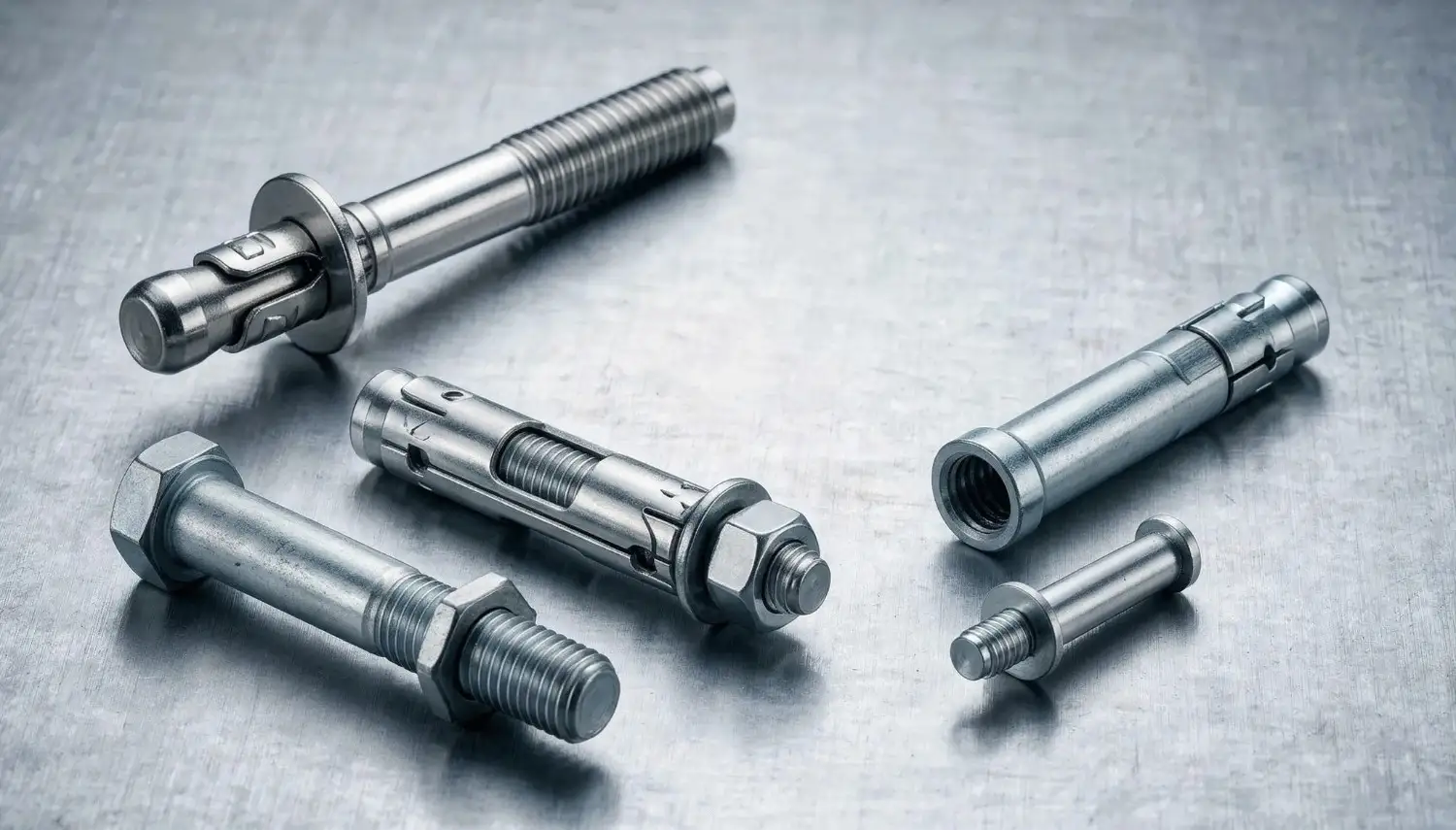
An Anchor Fastener transfers load from a structure or fitting into the base material — typically concrete, brick, or masonry. The range of available Fasteners Types includes expansion anchors, sleeve types, threaded rod systems, drop-in internals, and frame fixings. Each was built for a specific combination of substrate, load direction, and environment. No single anchor handles everything well — that's the critical point before specifying anything.
TRIVIA: The mechanical expansion anchor was first patented in the late 1800s for railway infrastructure. That same core principle — friction-based grip inside a drilled hole — still underpins most modern anchor systems.
Why Anchor Performance Matters in Tough Conditions
Concrete Anchor Bolts placed in cracked concrete lose significant pull-out capacity if the product wasn't rated for cracked zones. Torqueing harder won't fix it — choosing the right anchor from the start will. These are the site conditions where specification errors tend to surface:
- Cracked concrete: needs anchors with explicit cracked-zone approval
- Vibrating machinery bases: require locking mechanisms to prevent gradual loosening
- Wet or coastal zones: galvanised coatings aren't enough — stainless grade is the baseline
- High-temperature plants: thermal cycling loosens interference-fit anchors over time
- Low-strength concrete: pull-out values drop sharply — verify base strength before specifying
Types of Anchor Fasteners for Challenging Environments
Here are some of the types of anchor fasteners:
1. Wedge Anchors
The Anchor Fastener Bolt in wedge form expands mechanically as the nut tightens, gripping into solid concrete. Best for heavy structural loads — column plates, machinery bases, steel brackets. Not suited for hollow masonry.
2. SS Anchor Fasteners
Where moisture, salt air, or chemical contact is involved, a SS Anchor Fastener (A2 or A4 stainless grade) is the responsible call. Coastal facades, food plants, water infrastructure — standard carbon steel corrodes fast in these environments.
3. Sleeve Anchors
Sleeve anchors spread load along most of their length, making them better suited for brick and block than wedge-only designs. Medium loads, wall handrails, masonry partitions — their natural ground.
4. Drop-In (Bullet) Anchors
Internally threaded and flush-set, drop-in anchors suit overhead pipe hangers, suspended HVAC runs, and anywhere a clean surface finish is needed. Solid concrete base is non-negotiable for these.
5. Nylon Frame Fixings
Designed for door and window installations in internal masonry. The nylon sleeve expands without fracturing the surrounding material — useful in older brickwork where cracking is a genuine risk.
Features to Look For When Buying Anchor Fasteners
Before approaching Anchor Fasteners Manufacturers in India, confirm these details to avoid costly specification errors:
- Material grade — carbon, hot-dip galvanised, A2 or A4 stainless
- IS and DIN standard compliance for the specific load case
- Cracked-concrete approval — mandatory in seismic zones
- Minimum embedment depth data, not just nominal figures
- Corrosion class rating for outdoor or chemical environments
- Verified pull-out and shear values from independent test reports
Product Overview — AFT Anchor Fasteners
AFT (Anchorite Fixing Technology) is among the established Anchor Fasteners Manufacturers in India, manufacturing a full range of mechanical fixing systems from Sonipat, Haryana. Products follow IS and DIN standards with approvals from CPWD, NHAI, NTPC, Indian Oil, and AAI.
Their range covers:
- Mechanical, expansion, structural, and Concrete Anchor Bolts
- Wedge, sleeve, and drop-in bullet fasteners
- SS Anchor Fastener variants (A2/A4) for corrosive environments
- Nylon frame fixings, anchor rods, and threaded rods
- Stone cladding clamps and facade bracket systems
Benefits of Using the Right Anchor Fasteners
Some of the benefits include:
- Structural reliability: a correctly specified anchor holds rated load under vibration, seismic stress, and dynamic loading
- Longer service life: certified Anchor Fasteners Suppliers in India reduce inspection and replacement frequency
- Code compliance: IS/DIN certified products clear inspections without hold-ups
- Application range: the right mix of fasteners types handles everything from lightweight frames to heavy structural connections
- Smarter procurement: knowing actual Anchor Fasteners Price per performance point prevents overspend and under-specification
Applications and Use Cases
Here are some of the applications and use cases:
- Infrastructure — bridges, metros, highways: heavy structural anchoring into reinforced concrete
- Industrial plants: machinery base plates, pipe supports — high-load Anchor Fastener Bolt systems rated for vibration
- Commercial facades: stone cladding and curtain walls using SS Anchor Fastener grades for long-term finish
- Residential: door and window installation in brick walls using nylon frame fixings
- Renewable energy: rooftop and ground-mount solar frames — wind uplift resistance is the critical load case
- Rail and metro: track-side brackets requiring cracked-zone approved, precision-torqued anchors
Anchor Fastener Comparison Table
Match anchor type to site condition at a glance:
|
Anchor Type |
Base Material |
Load Type |
Ideal Condition |
Typical Use |
|
Wedge Anchor |
Solid Concrete |
Heavy Structural |
Dry / Cracked Concrete |
Column Bases, Machinery |
|
Sleeve Anchor |
Concrete / Brick |
Medium Load |
Hollow & Solid Walls |
Handrails, Partitions |
|
Drop-In Anchor |
Solid Concrete |
Med–Heavy |
Overhead / Flush |
Pipe Hangers, HVAC |
|
SS Anchor |
Concrete / Masonry |
Heavy Load |
Coastal / Chemical |
Marine, Facades |
|
Nylon Frame Fixing |
Hollow / Solid Wall |
Light–Medium |
Interior Frames |
Doors, Windows |
Expert Tips and Buying Guide
How to Buy Right?
Whether approaching Anchor Fasteners Dealers in India for a single job or running bulk procurement through Anchor Fasteners Wholesalers in India, always request the product datasheet. Pull-out values vary significantly between anchor families — and the box label doesn't always reflect performance in your specific base material.
- Substrate first — base material dictates anchor family, not the other way around
- Outdoor, coastal, or chemical zones: stainless steel is the baseline, not an upgrade
- Check minimum embedment depth before drilling — under-embedding is the most common site error
- Use a calibrated torque wrench — overtightening splits concrete; undertightening loses grip
- Clean drill holes before setting — dust cuts load transfer capacity significantly
- Cracked concrete? Confirm the anchor carries explicit cracked-zone approval
On Anchor Fasteners price: don't compare unit cost alone across Anchor Fasteners Suppliers in India. Certification, material grade, and technical support all factor in. A cheaper fixing that fails inspection costs far more than the saving.
About Us (Anchorite Fixing Technology)
AFT (Anchorite Fixing Technology) is the best industrial fastening solution. We are the most trusted and reliable partner for many businesses. Since 2017 we have been providing solutions to various sectors. Our expertise is in providing the companies with high-performance and customized construction fastening solutions. We offer anchor fasteners and anchor products that are used in modern industries. AFT focuses on delivering reliable and durable fastening systems that ensure safety and performance. We provide sustainable solutions that meet the modern industrial demands. AFT (Anchorite Fixing Technology) combines advanced technology with industry expertise to provide efficient solutions. If you are ready to source high-quality fastening solutions, then you are at the right place. We also serve nuts and bolts, anchor-type products, and rods that will meet your needs perfectly.
Frequently Asked Questions
1. What makes an anchor fastener fail in cracked concrete?
Ans: Most standard Anchor Fastener products aren't rated for cracked zones. The crack widens under load, grip drops, and the fixing loosens. Always confirm cracked-concrete approval before specifying — it's not a minor detail.
2. When should I choose an SS anchor fastener over a standard one?
Ans: Whenever moisture, salt air, or chemicals are nearby. A SS Anchor Fastener in A2 or A4 stainless handles what galvanised steel can't — coastal sites, food plants, and water infrastructure all need it from day one.
3. Are concrete anchor bolts suitable for vibrating machinery bases?
Ans: Concrete Anchor Bolts work on machinery bases only if they're specified for dynamic loads. Standard expansion anchors loosen under constant vibration. Ask your supplier for anchors with verified vibration-resistance ratings before installation.
4. How do I find reliable anchor fasteners suppliers in India?
Ans: Look for Anchor Fasteners Suppliers in India with IS/DIN certifications and approved project references. AFT, based in Sonipat, Haryana, supplies to CPWD, NHAI, and NTPC — a track record worth checking before placing bulk orders.
5. What's the most common installation mistake with anchor fastener bolts?
Ans: Under-embedding. Most site crews drill to the minimum and stop there. With an Anchor Fastener Bolt, embedment depth directly affects pull-out capacity — going even slightly short of the rated depth cuts performance noticeably.
6. How does anchor fasteners price compare across different types?
Ans: Anchor Fasteners Price varies by material grade, load rating, and certification level. Stainless costs more upfront, but factor in service life and rework avoided. Buying purely on unit price from any dealer often costs more long-term.
Conclusion
Anchor performance fails by specification, not by accident. Getting Concrete Anchor Bolts right in cracked zones, choosing a SS anchor fastener where corrosion is real, sourcing from verified Anchor Fasteners Manufacturers in India — these aren't complications. They're the difference between a fixing that lasts the life of the structure and one that needs replacing in two years.
| Source certified anchor fasteners for your next project — Contact us to explore the full range and request a bulk quote. |