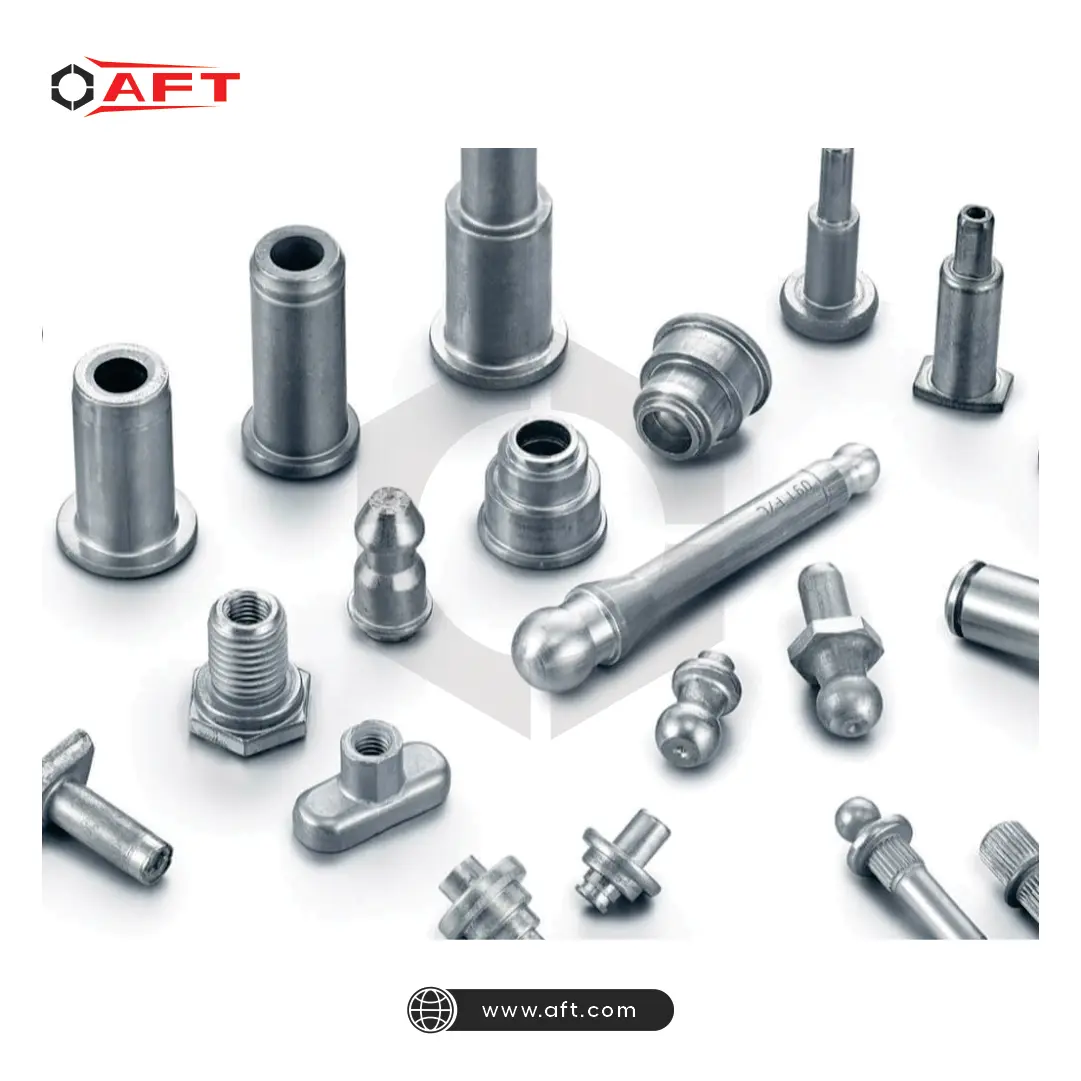





What Are Base Plate Anchors? Types, Uses & Benefits
A practical guide to choosing the right anchoring system for steel structures, machinery, and heavy-duty construction work
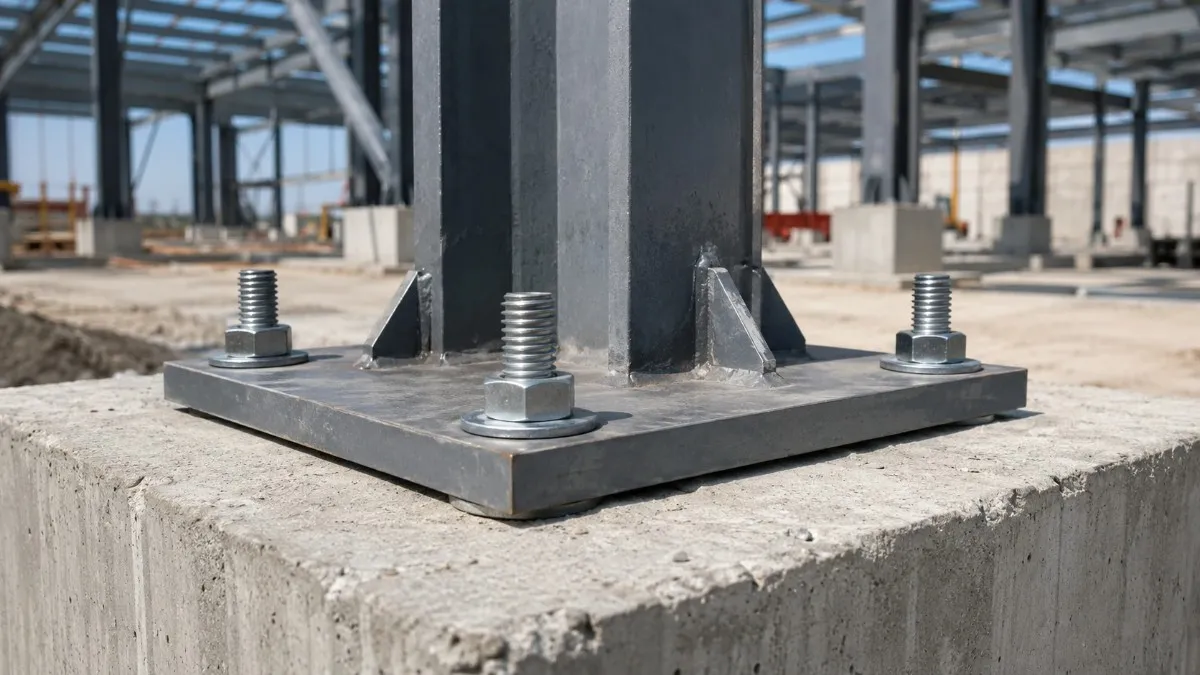
Walk onto almost any construction site and you'll notice something simple: steel doesn't just sit on concrete, it gets bolted down. That connection carries the weight of columns, machines, and railings above it. This is the job of base plate anchors, and they show up in factories, flyovers, warehouses, and residential builds alike. If you're comparing Anchor Fastener Manufacturer options, or choosing between different Structural anchors for a new steel frame, it helps to understand what these anchors actually do.
What is a Base Plate Anchor?
So what exactly is a base plate anchor? At its simplest, it's a threaded rod, bolt, or rod-and-nut assembly embedded into concrete to hold a steel base plate, column, or machine frame in place. It isn't the same as the light-duty Concrete fasteners used for a wall bracket — these take shear, tension, and vibration together, often for years without loosening. They sit under the wider umbrella of Foundation anchors, covering anything that ties steel to concrete, from a guardrail post to a bridge parapet. A Base Plate Anchor Bolt usually pairs with a nut and washer, giving installers room to adjust embedment depth and level the plate on site.
Why is it Important?
Why does this matter? Because the anchor is doing quiet, unglamorous work that decides whether a structure actually stays put.
- Loads — dead weight, live loads, seismic movement — all pass through this one connection before reaching the foundation
- Base plates can lift, slide, or twist under load if the anchor isn't holding properly
- Heavy Duty Anchor Bolts make it possible to mount industrial machinery without it shifting over time
- Good anchors cut maintenance costs by resisting corrosion and vibration instead of fighting them later
- They keep a project within IS and DIN specification, which most engineers will insist on anyway
Skip proper anchoring and even a well-engineered steel frame can end up misaligned or unsafe — which is why picking a dependable Anchor Fastener Manufacturer matters as much as the design itself.
Types & Variants
Not every anchor is built the same, and that's actually a good thing — different jobs call for different rods.
- Standard grade anchor rods — basic threaded rod with nut and washer, fine for most general structural connections
- High performance anchor rods — higher tensile grade, built for heavier brackets and load transfer
- Stainless steel anchor rods (SS304) — holds up against corrosion, common on facade brackets and steel columns
- Marine grade anchor rods (SS316) — the usual choice near the coast or under constant chemical exposure
- Mechanical Anchor Fasteners — wedge or expansion-style anchors, ideal for fixing into concrete that's already cured
- Expansion anchors — grip the concrete through mechanical expansion once the bolt is torqued down
Thread size, length, and embedment depth all shift by type, giving real flexibility in matching Anchor bolts to a project's exact load and exposure.
Features to Look For
Here are the features of base plate anchors:
- Full or partial thread, depending on how much embedment adjustment you'll need
- Compatibility with chemical anchoring for extra pull-out resistance
- Corrosion resistance suited to the site — indoor, outdoor, or coastal
- Precision-rolled threads so the nut engages cleanly and torque stays consistent
- Clear material grade certification, whether that's 5.8, 8.8, or a stainless spec
- Resistance to vibration and wear for machinery mounts
- Installation that doesn't need specialised tools or a steep learning curve
Get these right and Structural anchors will do their job quietly for the life of the structure.
|
Fact Galvanised rods in Grade 5.8 or 8.8 remain the most commonly specified option because they strike a fair balance between strength, cost, and corrosion resistance. |
Product Overview
A typical range covers standard galvanised rods, high-tensile rods, and stainless variants, in different thread sizes and lengths for guardrails, crash barriers, bridge parapets, bollards, and machinery frames. As Concrete Anchor Bolts, these go through strength and durability testing before they reach a job site, so they hold up whether you're retrofitting an old structure or starting fresh. A dependable Anchor Fastener Manufacturer will also hand over proper technical sheets, so specifying the right anchor isn't left to guesswork.
Benefits
Here are the benefits of base plate anchors:
- Handles heavy structural and industrial loads without flinching
- Lasts longer thanks to corrosion, vibration, and wear resistance
- Embedment depth can flex depending on the connection needed
- Works with both mechanical and chemical anchoring methods
- Installs faster than cast-in anchor systems
- Comes in enough thread sizes to fit almost any spec
Put simply, these outperform generic Construction fasteners any time the connection is safety-critical.
Applications & Use Cases
Here are the applications of base plate anchors:
- Guardrail posts, crash barriers, bollards
- Bridge parapet supports, lifting equipment foundations
- Machinery base frames, equipment platforms
- Railings, balustrades, staircases
- Structural steel columns and beams
- Retrofitting and seismic strengthening jobs
- Electrical, HVAC, and pipeline supports
From a small residential balustrade to a heavy industrial platform, the anchor's job stays the same: keep the steel exactly where it's supposed to be.
|
Trivia The word anchor comes from ship anchors gripping the seabed. A base plate anchor does more or less the same job — just underground instead of underwater. |
Comparison Table: Base Plate Anchor Types at a Glance
| Anchor Type | Material Grade | Best Suited For | Corrosion Resistance |
|---|---|---|---|
| Standard Anchor Rod | Galvanised 5.8 | General structural connections | Moderate |
| High Performance Anchor Rod | Galvanised 8.8 | Heavy brackets, structural load transfer | Moderate |
| Stainless Steel Anchor Rod | SS304 | Facade brackets, steel columns | High |
| Marine Grade Anchor Rod | SS316 | Coastal & harsh environments | Very High |
| Mechanical Anchor Fastener | Carbon / Alloy steel | Post-installed fixing into cured concrete | Moderate to High |
|
Did You Know? One correctly embedded anchor rod can carry several tonnes of load. Diameter gets most of the attention, but anchorage depth is usually what really decides the strength. |
Expert Tips & Buying Guide
Here are the expert tips and buying guide for base plate anchors:
- Base your anchorage depth on the engineer's load calculations, not just the bolt diameter
- Go stainless or marine-grade for coastal or chemically exposed sites
- Double-check material certification (5.8, 8.8, SS304, SS316) before ordering in bulk
- Confirm thread compatibility with your base plate and washer specs
- Buy from a certified Anchor Fastener Manufacturer that actually follows IS and DIN standards
- Ask for datasheets covering thread size, length, and anchorage depth upfront
- Pair Expansion anchors or chemical systems with proper site preparation — skipping this step is where most pull-out failures start
A bit of care at the buying stage saves a lot of grief once anchors are set in concrete.
|
Fact Galvanised rods in Grade 5.8 or 8.8 remain the most commonly specified option because they strike a fair balance between strength, cost, and corrosion resistance. |
About AFT
AFT (Anchorite Fixing Technology) is the best industrial fastening solution. We are the most trusted and reliable partner for many businesses. Since 2017 we have been providing solutions to various sectors. Our expertise is in providing the companies with high-performance and customized construction fastening solutions. We offer anchor fasteners and anchor products that are used in modern industries. AFT focuses on delivering reliable and durable fastening systems that ensure safety and performance. We provide sustainable solutions that meet the modern industrial demands. AFT combines advanced technology with industry expertise to provide efficient solutions. If you are ready to source high-quality fastening solutions, then you are at the right place. We also serve nuts and bolts, anchor-type products, and rods that will meet your needs perfectly.
FAQS
1. What is a base plate anchor used for?
Ans: Honestly, it's the thing holding your steel down. A base plate anchor fixes a base plate, column, or machine frame onto concrete — and it's got to take shear, tension, vibration, all of it, at once. You'll see it under guardrails, machinery platforms, bridge parapets. Basically wherever steel meets a slab.
2. How deep should a base plate anchor be embedded?
Ans: There's no fixed number, and anyone who gives you one without seeing your load calcs is guessing. Depth depends on the load, the thread size, the grade. Deeper usually means stronger, sure, but diameter alone won't tell you that. Check the anchorage depth on the datasheet. Don't eyeball it.
3. What's the difference between mechanical anchors and expansion anchors?
Ans: Mechanical anchors is really just the umbrella term — any post-installed fastener that grips concrete without glue falls under it. Expansion anchors are one type inside that group; they work by expanding a sleeve or wedge as you tighten the bolt. So yes, every expansion anchor is mechanical. Not every mechanical anchor expands, though.
4. Can base plate anchors be used outdoors or in coastal areas?
Ans: Yes — but the material grade matters a lot more once you're outside. Standard galvanised rods are fine for sheltered sites, but coastal or chemically exposed locations need stainless, ideally SS316 marine grade. Skip this step and you'll likely see corrosion and lost strength long before the actual structure shows any wear.
5. How do I choose between a standard grade and high-performance anchor rod?
Ans: It comes down to load, mostly. Standard grade (Galv. 5.8) handles general structural connections without issue. Heavier brackets, machinery, anything under real dynamic stress, that usually calls for the higher tensile Galv. 8.8 rod instead. Not sure which one fits? Ask your structural engineer first — don't just default to standard.
6. Do base plate anchors need to be installed by a professional?
Ans: You can install one yourself, technically, if you stick to the torque and embedment specs. But on anything load-bearing or safety-critical, get someone experienced to do it. A nut that's slightly under-torqued, or a hole drilled a bit shallow, looks totally fine on day one. The problem shows up months later.
Conclusion
Base plate anchors aren't glamorous, but they're doing the real work of holding steel to concrete. From Foundation anchors under a bridge parapet to Heavy Duty Anchor Bolts holding down a machine, the material and embedment depth you choose will shape how safe that connection turns out to be. Whether the job calls for standard rods, stainless variants, or specialised Mechanical Anchor Fasteners, working with a manufacturer who knows the standards means the anchor performs as engineered — for years, not just the inspection.
| Need base plate anchors built for real load, not just a spec sheet? Reach out to our technical team at AFT for guidance and bulk-order support today. |