




What Is Nylon Frame Fixing? Complete Installation Guide
A practical guide to nylon frame fixing anchors, their features, and correct installation for doors, windows, and structural frames.
A door or window usually gets attention only after something's gone wrong with it. Maybe a hinge starts sagging, or the frame rattles every time the wind picks up. Sometimes a screw just gives out after enough monsoons roll through. In most of these cases, though, the actual problem isn't the frame at all — it's whatever was holding that frame to the wall in the first place. That's the gap Nylon Frame Fixing anchors are built for. A flexible nylon sleeve works alongside a metal screw so the fixing bites in hard, but the wall around it doesn't take the punishment. On concrete, brick, or masonry, builders keep coming back to this style of anchor for one simple reason — it holds strong without tearing anything up along the way.
What Is Nylon Frame Fixing?
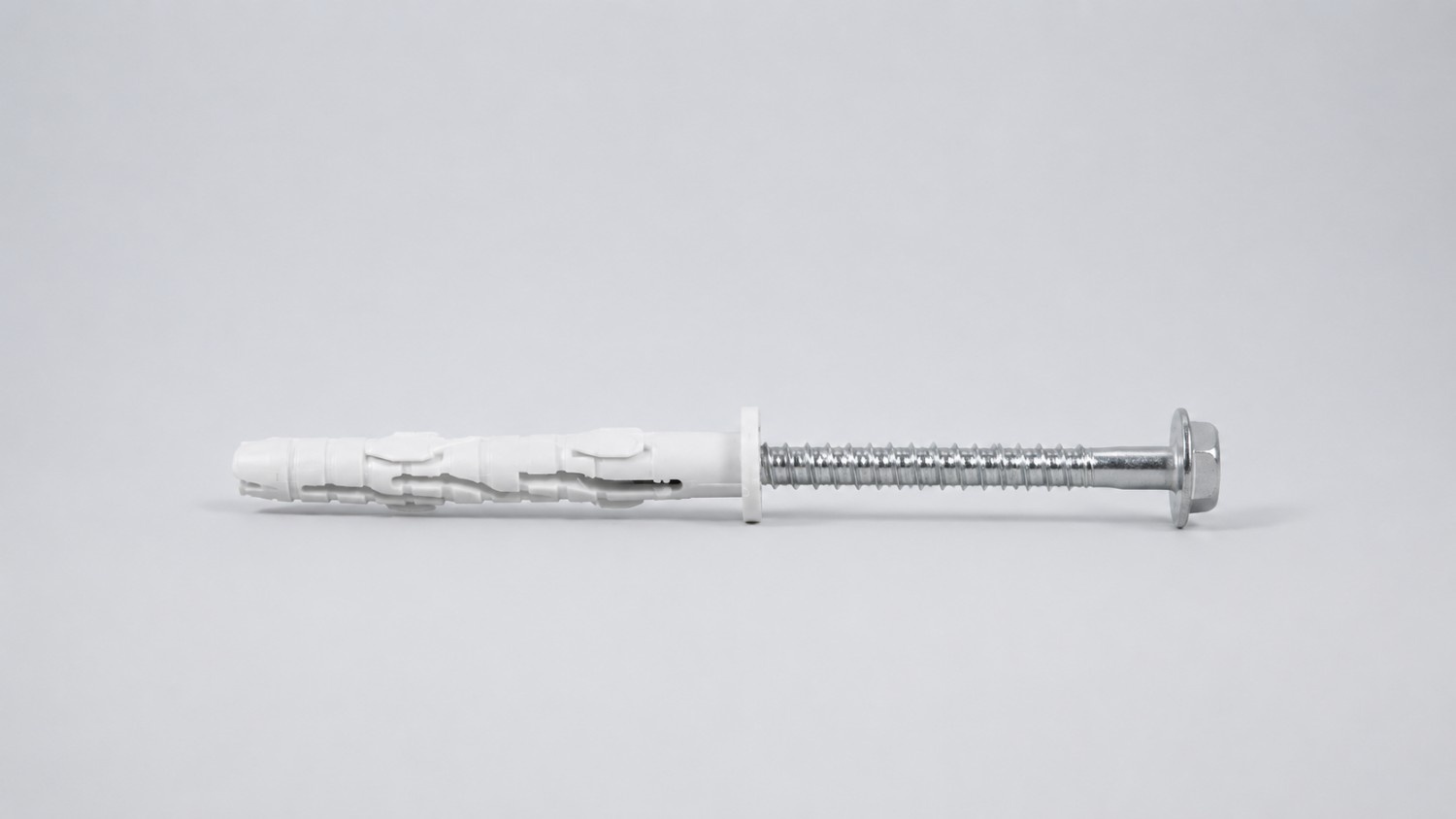
So what's actually inside a Nylon Frame Anchor? Not much, really — just a nylon sleeve sitting in a drilled hole, plus a screw that passes through the frame and into that sleeve. Once the screw starts tightening, the sleeve pushes out sideways and wedges itself against whatever's behind it, rather than fighting the material. A Frame Fixing Anchor works on that same principle: a firm hold with minimal stress on the wall. One more thing worth knowing — it has to run longer than an ordinary wall plug, simply because it needs to pass through the frame itself before it ever touches the masonry underneath.
Why Is It Important?
A poorly fixed frame rarely fails on day one. Months later, once the building settles, sagging and rattling show up. Getting the anchor right early saves that headache.
- Spreads the load across the frame and wall instead of one weak point
- Keeps masonry from cracking while the anchor is going in
- Holds up under the vibration of everyday door and window use
- Cuts down on callbacks and repair visits down the line
- Doesn't shift much even as temperatures swing through the seasons
Types and Variants
Nylon fastener ranges aren't one-size-fits-all — several head and sleeve styles exist to match different frame depths and wall types.
- Hex head versions, useful when you need extra torque going in
- Countersunk heads for a flush finish where looks matter
- Sleeved versions with a reinforced expansion zone for tougher walls
- Combi styles that work in both solid and hollow substrates
All of these sit under nylon anchor fasteners, and the right pick comes down to frame depth, wall type, and expected load. Sourcing fasteners nylon in bulk? Double-check sleeve diameter against the drilled hole first — a common site complaint.
Features to Look For
A few things separate a decent anchor from a mediocre one.
- Material grade — higher-grade nylon shrugs off corrosion, moisture and heat far better than cheaper blends
- Screw fit, so the drive doesn't strip halfway through installation
- Even expansion along the sleeve, not just a bulge at one end
- A length range wide enough to cover your actual frame-plus-wall depth
- Some form of testing or certification behind the holding figures quoted
Where to Source Nylon Frame Fixing Anchors
Nylon Frame Fixing Anchors Manufacturers in India are usually judged on batch consistency, since strength shouldn't vary run to run. Pair that with suppliers who keep stock moving, and site work rarely stalls.
For smaller or unusual requirements, dealers tend to be more hands-on about matching size and head type. For bigger volumes, Nylon Frame Fixing Anchors Wholesalers in India have the inventory to keep large projects supplied.
Product Overview
Most catalogues cover the same ground, so here's a quick baseline before comparing brands.
| Feature | Typical Specification |
|---|---|
| Material | High-grade nylon body with steel screw |
| Head Type | Hex, countersunk, or combi head |
| Base Suitability | Concrete, brick, and solid masonry |
| Corrosion Resistance | High, due to non-metallic sleeve |
| Common Use | Door frames, window frames, partitions |
| Installation Tool | Standard drill and screwdriver |
|
Did You Know? Nylon simply doesn't rust — that's the main reason it gets picked for humid or coastal sites. |
Benefits of Using Nylon Frame Fixing Anchors
Here are the benefits of using Nylon Frame Fixing Anchors by Nylon Frame Fixing Anchors Dealers in India:
- Light in hand, so installers move faster through a batch of frames
- Won't corrode the way untreated metal fixings sometimes do
- Puts less stress on the masonry around it as it expands
- Works out cost-effective whether it's a single frame or a full order
- Holds up well to repeated use across renovation jobs
|
Trivia: Nylon was actually a brand name first — it only became the generic term for this polymer family later on. |
Applications and Use Cases
Anywhere a frame needs joining to a solid base, Nylon Frame fixing anchors tend to show up — on fresh builds and retrofit sites alike.
- Door and window frame installation
- Partition walls in offices and homes
- Cabinets and fittings going onto masonry
- Interior fit-outs where clean, low-damage fixing matters
- Renovation work where the existing wall has to stay intact
- Shopfronts and signage frames
Nylon Anchors vs Metal Frame Fixings
Set a nylon-sleeved anchor next to a plain metal one and a few differences stand out fairly quickly:
- No exposed metal sleeve in the wall means corrosion isn't really a factor
- Lighter to carry and handle across a site
- Expands more gently, so older or softer masonry is less likely to hairline crack
- Holds its own on light-to-medium loads, usually at a lower material cost
Metal still wins on heavy structural loading, but for the door, window, and partition work most projects need, nylon is usually the more sensible pick.
|
Fact: Hole depth, more than almost anything else, decides how well an anchor actually holds. |
Expert Tips and Buying Guide
A little groundwork before a bulk order saves back-and-forth later by Nylon Frame Fixing Anchors Suppliers in India.
- Match the anchor length to the frame and wall thickness combined, not just the wall
- Ask for test certificates covering load and pull-out strength
- Double-check screw and sleeve compatibility before committing to a large order
- Find out how the product should be stored and packaged on site
- Get quotes from more than one source before you settle on one
Installation Steps
- Mark where you'll drill, right through the frame into the wall
- Drill to the depth and diameter the anchor calls for
- Blow or brush the dust out so the sleeve can expand properly
- Push the nylon sleeve all the way into the hole
- Run the screw through the frame and into the sleeve
- Check the frame sits straight before the final tighten
About AFT
AFT (Anchorite Fixing Technology) is the best industrial fastening solution. We are the most trusted and reliable partner for many businesses. Since 2017 we have been providing solutions to various sectors. Our expertise is in providing the companies with high-performance and customised construction fastening solutions. We offer anchor fasteners and anchor products that are used in modern industries. AFT focuses on delivering reliable and durable fastening systems that ensure safety and performance. We provide sustainable solutions that meet the modern industrial demands. AFT combines advanced technology with industry expertise to provide efficient solutions. If you are ready to source high-quality fastening solutions, then you are at the right place. We also serve nuts and bolts, anchor-type products, and rods that will meet your needs perfectly.
FAQs
1. What exactly is a nylon frame fixing anchor used for?
Ans: It's mainly used to lock door and window frames onto concrete, brick, or masonry walls. The nylon sleeve expands once the screw goes in, gripping the base material without cracking it. Builders reach for this option because it holds firmly while still being gentle on the surrounding wall.
2. Can nylon frame fixing anchors handle outdoor or damp conditions?
Ans: Yes, and that's actually one of their strong points. Nylon doesn't rust the way untreated metal can, so these anchors keep performing in humid, wet, or coastal environments without corroding over time. That makes them a practical choice for exterior door frames, window installations, and outdoor fittings exposed to weather.
3. How do I know what size anchor to order?
Ans: Measure the combined thickness of the frame and the wall behind it — that's the number that matters most. The anchor needs enough length to pass fully through both. If you're unsure, most manufacturers or dealers can help match the right size once you share basic project specifications.
4. Are these anchors suitable for heavy structural loads?
Ans: Not really — they're built for light to medium loads like door frames, window frames, partitions, and interior fittings. For heavy structural work, metal anchors are usually the better fit. Nylon anchors are chosen more for their corrosion resistance and gentler installation than for maximum load-bearing capacity.
5. Can I source nylon frame fixing anchors in bulk for a large project?
Ans: Absolutely. Most manufacturers and wholesalers offer bulk supply with steady stock availability, which matters when a project timeline depends on consistent delivery. Buying in volume also tends to work out more cost-effective per unit, and reliable suppliers can guide you on storage and handling until installation begins.
6. What tools do I need to install a nylon frame fixing anchor?
Ans: Nothing specialised — just a standard drill and a screwdriver. Drill the hole to the correct diameter and depth, clear out the dust, insert the sleeve, then drive the screw through the frame into it. Keeping the hole clean and properly sized makes the biggest difference to how well it holds.
Conclusion
A nylon frame fixing anchor does one job well — keeps a frame locked to masonry or concrete without corroding or cracking the wall. Get the size right, buy from a manufacturer that actually tests its product, and there's little reason for it to give trouble.
| Need certified nylon frame fixing anchors for an upcoming project? Reach out to AFT for samples and bulk pricing. Contact Us Now! |