




Why Mechanical Splicing Is Replacing Traditional Lap Splicing
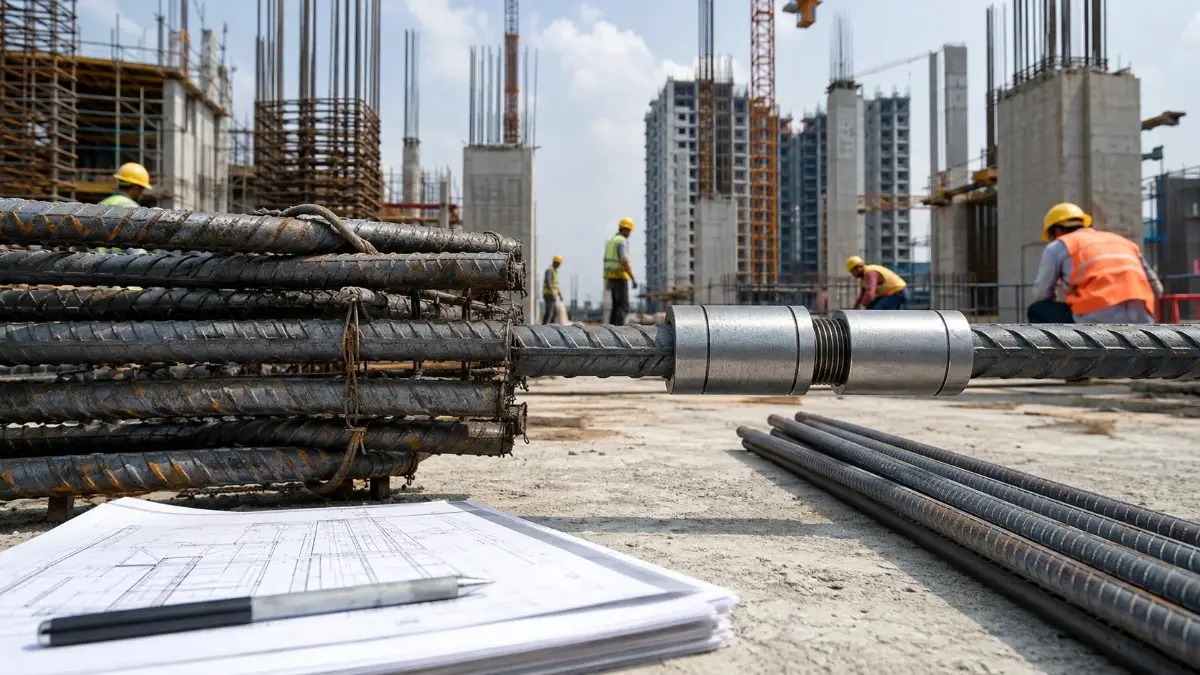
Today, strength, durability and time saving on projects are key issues in the engineering and construction field. There are reinforcement systems which are very important in increasing the load-bearing capability of concrete structures, and the selection of suitable joining technique for reinforcement bars has a significant effect on their performance. The most common method of joining reinforcement bars is lap splicing, but as construction demands increase, a new joining technique called mechanical splicing has come into existence.
Reinforcement Rods are components which are used in reinforced concrete structures to offer tensile strength and avoid cracks due to heavy load. Although lap splitting techniques have existed in the construction industry for many years, they often cause wastage of materials and congestion and cannot be used in complicated projects involving tall buildings. Mechanical splicing is a modern technique for creating strong and direct connections between reinforcement rods.
Aftfixing is a well-known company for its advanced reinforcement systems and offers reliable products and services for reinforcement of modern constructions according to the specifications of customers.
Tradition Lap Splice in Reinforcement System: An Overview
One of the oldest splicing methods used for reinforcement bars connection is lap splice technique. In this process, the two reinforcement bars are overlapped for a certain length so that the concrete around the bars can transfer stress through them.
Despite the simplicity and popularity of this method, there are some disadvantages associated with this method. The overlapping length varies depending on several factors, including the grade of concrete, diameter of bars, etc. As the size of the reinforcement increases, the overlapping length also increases. This leads to a higher consumption of steel bars and increased costs of the project.
In the cases where a heavily reinforced structure such as bridge, tunnel, industrial building or highrise tower is constructed, the lap splicing can cause congestion of reinforcement.
Due to these difficulties, construction experts are increasingly turning to mechanical splices for Reinforcement Rods for Concrete.
What is Mechanical Splicing of Reinforcement Rods?
Mechanical splicing is one of the most sophisticated technologies for connecting reinforcement rods, which requires the use of special couplers. As opposed to overlapped bars, the process of mechanical splicing joins two reinforcement rods together by means of threading or other coupling devices.
Mechanical splicing forms a reliable mechanical connection capable of transmitting not only tensile but also compressive loads. The method of mechanical splicing is used for many projects in order to increase their durability and density.
The use of mechanical splicing, unlike lap splicing, allows the engineers to connect reinforcement rods without any significant overlap; hence, there is no need for additional steel and density of the reinforcement within the concrete structure.
Aftfixing provides effective reinforcement systems according to modern requirements of the construction industry.
Why Mechanical Splicing is Superior to Traditional Lap Splicing
Understand the reason why mechanical splicing is superior to traditional one:
1. Less Steel Requirement
The first important benefit of using mechanical splicing is the reduced requirement of steel in a building structure. For lap splicing, extra length of reinforcement bars is needed as bars are required to overlap in order to facilitate the transfer of load.
By eliminating the unnecessary overlapping of bars, it becomes easier to use the reinforcement rods properly and reduce the quantity of steel required.
In a major construction project, this reduction in material cost can play an important role in the total project cost.
2. Enhanced Strength of Construction
As mechanical splice establishes a direct connection between reinforcement bars, there is perfect force transfer at the point of joint. The couplers used in the process are designed to bear heavy loads of tension and compression.
As compared to lap joints, which can perform only when the concrete bonding occurs around the overlapped bars, mechanical splicing is considered the better option for earthquake resistant structures and high rise buildings.
3. Improved Reinforcement Spacing
There arise complex reinforcement arrangements in contemporary buildings that may involve multi-layering of steel bars. The lap splicing method results in congestion due to overlapping reinforcement sections.
The mechanical splicing method will lead to reduced congestion since it involves reduced spacing required in jointing the bars. This ensures free movement of the concrete around the reinforcements.
In cases where there is less space or complicated structures, mechanical splicing serves as an alternative method.
4. Quick Installation
The installation process forms an important criterion in the current competitive construction environment. Lap splicing involves correct measurements, positioning, and handling of the reinforcements.
Mechanical splicing makes installation much easier since the reinforcement bars are connected using coupling joints.
Fun Facts -Mechanical Splicing is Like a “Steel Connector Bridge”
Just like a strong bridge connects two separate points, mechanical couplers connect two reinforcement rods and transfer heavy loads efficiently. They act as a secure joining point that helps maintain the strength of the entire concrete structure.
Usefulness of Good Quality Reinforcement Rods in Modern Construction
The effectiveness of the reinforcement process is determined by the quality of the reinforcement rod material. Steel Reinforcement Rods are frequently utilised in constructions due to their high strength, durability, and the fact that they can enhance the efficiency of concrete.
Features of good quality reinforcement rods include:
- Increased tensile strength
- High load resistance
- Excellent longevity
- Good structural stability
- Prevention from cracking and deformation
| Did You Know? Steel Reinforcement Rods Act Like the “Skeleton” of Concrete Structures Concrete is extremely strong under compression but has limited tensile strength. High-quality Steel Reinforcement Rods provide the required tensile strength, helping concrete structures withstand heavy loads, vibrations, and external forces. |
Mechanical Splicing Applications with Reinforcement Rods
The mechanical splicing system is applied in diverse building construction projects such as:
High Rise Buildings
Tall buildings need reinforcement structures that can withstand both heavy vertical and lateral loads. Mechanical splicing is helpful in maintaining the reinforcement structure without increasing congestion.
Bridge and Infrastructure Building Projects
Bridges, highways, and tunnels need reinforcement structures that can withstand constant loads and strains. The mechanical splicing system performs well in such environments.
Industrial Construction Projects
Factories, warehouses, and power stations require robust concrete structures with reinforcement. Mechanical splicing facilitates the quick construction of buildings.
Seismically Stable Buildings
Reinforcement structures in seismically stable zones need to be flexible and robust. Mechanical splicing plays an important role in the formation of strong structural connections.
|
Did You Know? Mechanical Splicing Helps Build Taller Structures Safely Modern skyscrapers require advanced reinforcement techniques to handle enormous vertical loads and strong wind forces. Mechanical splicing helps maintain strong reinforcement connections while reducing congestion inside columns and beams. |
Reinforcement Rod Manufacturers in India to Consider for Trustworthy Options
It is important to choose the right company to get quality materials in your construction process. Professional Reinforcement Rod Manufacturers in Indiaconcentrate on the production of quality and durable products.
Good suppliers provide their customers with reinforcement bars that are measured precisely, have high strength, and use high-quality materials. Good suppliers also offer technical support and solutions based on their customer's requirements.
Aftfixing focuses on providing quality reinforcement solutions for professionals engaged in construction business.
What Makes Professionals Go for Reinforcement Rod Suppliers in India?
There are numerous benefits that professionals can get from reputed Reinforcement Rod Suppliers in India, which include:
- Availability of high-quality rods
- Reinforcement for big construction projects
- Reasonable prices
- Technical assistance
- On-time delivery
- Control over quality
Professional suppliers understand the needs of construction business well enough and can provide appropriate solutions for all kinds of constructions.
Choosing the Right Reinforcement Rod Dealers and Wholesalers
For contractors and builders, choosing trustworthy Reinforcement Rod Dealers in India guarantees easy access to quality reinforcement rods. The dealers play a role in filling the gap between the producers and the construction site through efficient distribution.
The same way is followed by the Reinforcement Rod Wholesalers in India, who ensure large inventories and continuous supply for bulk construction needs.
On looking for Reinforcement Rods near me, one must ensure that they get genuine products along with reliable services.
Future of Reinforcement Technology in Construction
The construction industry has been continuously upgrading itself with modern technologies. Mechanical splicing has been one such innovation in the field of reinforcement technology that replaces the obsolete connection techniques with better and effective methods.
With the increase in size and complexity of construction projects, there will be a need for advanced reinforcement techniques. In this regard, mechanical splicing will serve its purpose in making the structure strong and saving time and waste of materials.
About AFT
AFT (Anchorite Fixing Technology) is the best industrial fastening solution. We are the most trusted and reliable partner for many businesses. Since 2017 we have been providing solutions to various sectors. Our expertise is in providing the companies with high-performance and customised construction fastening solutions. We offer anchor fasteners and anchor products that are used in modern industries. AFT focuses on delivering reliable and durable fastening systems that ensure safety and performance. We provide sustainable solutions that meet the modern industrial demands. AFT combines advanced technology with industry expertise to provide efficient solutions. If you are ready to source high-quality fastening solutions, then you are at the right place. We also serve nuts and bolts, anchor-type products, and rods that will meet your needs perfectly.
FAQs
1. What are the uses of Reinforcement Rods in Construction?
Reinforcement Rods are used to reinforce concrete structures through extra tensile strength and increase their load bearing capacity. They protect from cracking and deformation in buildings, bridges, industrial constructions, and other construction works.
2. Why is mechanical splicing of reinforcement rods preferred over lap splicing?
Mechanical splicing gives stronger and more reliable joints than conventional lap splicing. It saves steel, prevents reinforcement congestion and gives fast installation. Mechanical splicing can be used in high rise and modern construction.
3. What should be taken care while choosing Reliable Reinforcement Rod Manufacturers in India?
The following things should be kept in mind while choosing manufacturers of Reinforcement Rods in India. These include the quality of product, standardisation of production, strength of material, expertise in industry, delivery services, and technical support.
4. Are Reinforcement Rods appropriate for all concrete structures?
Yes, Reinforcement Rods for Concrete are extensively used in residential buildings, commercial complexes, bridges, tunnels, industrial plants, and infrastructural projects. Appropriate grades and connections of the reinforcements are based on the construction design and needs of its usage.
5. Who are Reliable Reinforcement Rod Suppliers & Dealers in India?
Reinforcement Rod Suppliers in India and Reinforcement Rod Dealers in India can be selected on the basis of their quality testing, prompt delivery, and technical assistance services.
6. Where do I get Reinforcement Rods near me?
In order to find Reinforcement Rods near me, you can select authorized suppliers, manufacturers, and dealers with a good market reputation. Selecting a good supplier like Aftfixing would guarantee you access to reliable reinforcement products and services.
Conclusion
The process of mechanical splicing is revolutionizing the reinforcement system used in construction. Compared to conventional lap splitting methods, mechanical splicing gives high strength, less usage of steel, proper positioning of reinforcement, and speedier construction.
High Quality Reinforcement Rods in combination with mechanical splicing technology help in giving a reliable solution for building durable concrete structures. Aftfixing gives trusted reinforcement solutions that suit your changing requirements.
| If you are in search of reliable partner, then selecting the suitable option, such as AFT, guarantees you a better performance in your project. Contact Us Now! |